
Fit for folded garments
Measure goods as staff will pack them, including tissue, tags and care cards.
Build a packaging range around garment folds, sets and changing order sizes.
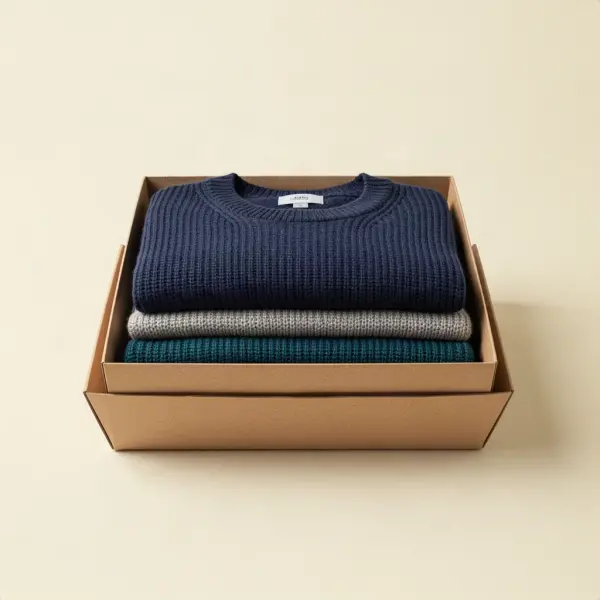
Measure goods as staff will pack them, including tissue, tags and care cards.
Group compatible sizes and confirm artwork quantities for ongoing and seasonal runs.
Measure typical single and multi-item orders after folding. Note where tissue or cards need to fit so the packing process stays consistent.
Fold the garments as staff will pack them and measure the largest finished footprint. Include tissue and any hang tags or care cards. Soft clothing takes up different space after packing, so check a sample with a real garment and leave enough headroom to avoid crushing presentation details.
A gift set may need a more structured carton, while a single item going through a fulfilment partner may fit a stable mailer. List common order groups by weight and volume. Compare one shared format with a modest range of sizes to see what helps your team pack consistently.
Place branding and returns information where customers see them without needing to remove all the contents. Reserve clear space for shipping labels on parcels and check that print stays legible after sealing. Illustrate the intended opening sequence if the sample needs to present layers in a particular order.
Provide separate quantities for recurring items and seasonal artwork. Where the structure can stay the same, ask how a design change affects proofing and lead time. Test the lightest and heaviest items in your planned range before ordering one pack for both.
Test the smallest and largest common orders. Use an insert or a second size when the garment moves or compresses.